

Connecting you to improved clinical practice and life-long learning.
The Yankee Study Club is a powerful digital learning experience reimagining the way dental professionals connect, grow, and thrive in today’s new dental landscape! The clinical, evidence-based programs are developed by the professionals within each discipline. Attendees will also have access to the speakers to ask questions and share cases (following HIPAA guidance) throughout the sessions.
Yankee Study Club 2026
CE Hours Per Course: 2
CE Type: Webinar Live
Wednesdays 6:30 – 8:30 PM
Please Note: Sessions 1 – 8 will be available on-demand until January 1, 2027.
Session 1
Speaker: Oz Banday, DMD
Moderator: Ancy Verdier, DMD
Date/Time: Wednesday, March 25, 2026 6:30-8:30 PM
Course Title: Complex Restorative Dentistry: A Prosthodontist’s Perspective
Course Description: Complex restorative cases challenge even experienced clinicians. Treatment planning decisions made early—often before a bur ever touches a tooth—can determine long-term success or failure. This course offers a prosthodontist framework for evaluating, planning, and executing complex restorative dentistry with confidence. Rather than focusing on isolated procedures, the emphasis is on comprehensive diagnosis, sequencing, risk management, and long-term predictability in cases involving worn dentition, failing restorations, occlusal dysfunction, and interdisciplinary needs. Participants will gain practical insights into how prosthodontists think through complexity balancing esthetics, function, biology, and patient-specific limitations while applying these principles directly to everyday private practice.
Course Objectives:
- Identify what truly makes a restorative case “complex” and recognize early red flags
- Apply a systematic diagnostic approach to worn, broken, or failing dentitions
- Understand occlusal considerations and when (and when not) to alter vertical dimension
- Develop predictable treatment sequences that minimize complications and remakes
- Improve communication with patients and specialists through clearer treatment planning
- Recognize cases appropriate for in-office management versus referral or co-treatment
Session 2
Speaker: Andrew Miller, DMD
Moderator: Carl McManama, DDS
Date/Time: Wednesday, April 29, 2026 6:30-8:30 PM
Course Title: Dental Trauma and How to Manage
Course Description: In this course, attendees will be introduced to and provided an overview of the most up-to-date Dental Traumatology Guidelines. Clinical cases will highlight baseline data collection, appropriate clinical testing, and how to determine which imaging modalities are indicated. Diagnosis and indicated immediate, short-term, and long-term care and outcomes will be reviewed.
Course Objectives:
- Recognize the different types of dental trauma
- Identify the appropriate imaging modalities indicated for the specific type of trauma
- Develop an initial treatment plan for each type of trauma
- Implement the AAE Trauma Guidelines in their clinical evaluation and treatment of patients with dental trauma
- Determine appropriate follow up routines based on individualized dental trauma findings
- Understand typical clinical and radiographic findings resulting from dental trauma
Speaker Bio:
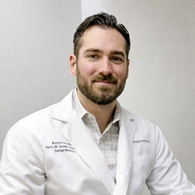
Andrew J. Miller is a Diplomate of the ABE, Fellow of the RCDC, Volunteer Faculty and Clinical Associate Professor at Boston University Henry M. Goldman School of Dental Medicine where he was the former Director of Predoctoral Endodontics when he received the prestigious Spencer N. Frankl Award for Excellence in Teaching. Dr. Miller has been active in the AAE and served on the AAE Special Committee to Update the AAE Trauma Guidelines, the AAE PPRC, and if the presiding Chair of the PAC. He is currently in full-time private practice at Lexington Endodontics and Quincy Dental Care, and holds Fellowships in the American Academy of Dental Science Pierre Fauchard Academy, International College of Dentists, American College of Dentists, and the Tri-Alpha Fraternity for First Generation College Graduates.
Session 3
Speaker: Lyndon Cooper, DDS, PhD
Moderator: Gerard Kugel, DMD, PhD
Date/Time: Wednesday, May 27, 2026 6:30-8:30 PM
Course Title: Is Digital Technology Essential for Single Tooth Implant Success?
Course Description: Over a 20 year period, we have defined some of the biologic parameters affecting single tooth implant success. During this time, digital technology has evolved to guide clinical therapies.
This course will address what is known regarding many factors influencing single tooth implant success and connect these with how we deploy digital technology for single tooth implant therapy. The discussion will include a) understanding the value of digital technology as a communication tool, b) defining the limitations of digital technology in treatment planning for single tooth implants, c) when and if guided surgery is needed for single tooth implant success, and d) how digital technology workflows can be used in the restoration of a single tooth implant. While digital technology is both fascinating and offers many advantages in practice, it is how we leverage this technology to achieve the goals of therapy that determine success. This is how clinicians gain the greatest return on investment when using digital technology in dental implant therapy.
Course Objectives:
- Utilize existing digital technology to improve communication related to treatment
- Define best practices for treatment planning for single tooth implants
- Understand when and how to utilize guided surgery for single tooth implant therapy
- Describe various work flows enabled by digital technology in the restoration of the single tooth implant
Session 4
Speaker: Juan Yepes, DDS, MD:
Moderator: Maritza Morell, DMD:
Date/Time: Wednesday, June 24, 2026 6:30-8:30 PM
Course Title: Pediatric Oral Radiology: From Radiation Safety to Lesions and CBCT
Course Description: This course will provide to attendees the most common radiographic lesions that are presented in infants, children, and adolescents. The course will use case-presentation as the learning and discussion format and will cover the entire spectrum of oral radiology in pediatric dentistry. Topics such as radiation safety, digital radiology, CBCT in pediatric dentistry, radiographic interpretation and common radiographic lesions in children will be covered in this course.
Course Objectives:
- Understand the importance of “building” a differential interpretation in radiology
- Identify the most common radiographic lesions in infants, children, and adolescents
- Discuss the indications of CBCT within the frame of practicing pediatric dentistry
- Explain the importance of radiation safety in the practice of dentistry with children and adolescents
Session 5
Speaker: Daniel Pompa, DDS
Moderator: Robert Cauley, DMD
Date/Time: Wednesday, September 2, 2026 6:30-8:30 PM
Course Title: The “Top 10” List for Essential Drugs in the 2026 Emergency Kit
Course Description: In this course, the instructor will discuss the prevention, preparation, recognition, and management of medical emergencies. Dr. Pompa will share proven clinical approaches while expanding analytical skills and will describe new methods while reviewing the most recent evidence-based medical literature. Guidelines and new algorithms will be introduced. Attendees will explore the “Conversational History” and how it uncovers medical issues not revealed by the standard health history form. Additionally, attendees will learn simple, non-invasive critical tests that can reduce overall risks and will delineate indications for emergency drug use and proper dosages. Attendees will have available to them, color-coded instructional cards depicting the most common life-threatening situations with algorithms for an easy-to-follow action plan for both dentist and team members.
Course Objectives:
- Recognize the most frequent life threatening emergencies plus when and why they occur
- Implement three simple chair-side, non-invasive tests to help avoid an emergency
- Review a systematic approach to treat the most common life-threatening scenarios depicted on color-coded cards
- Determine when to administer the Essential “Top 10” Emergency Drugs
- Develop a plan for the office team when dealing with a crisis event
Speaker Bio:
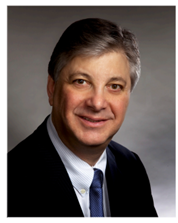
Daniel Pompa, DDS: is an Oral and Maxillofacial Surgeon. He is a Fellow in both The American Association of Oral and Maxillofacial Surgeons and the International Congress of Oral Implantologists. Dr. Pompa practiced Oral and Maxillofacial Surgery for over 30 years in New York and now lectures full-time.
Session 6
Speaker: Craig Vacek, DDS
Moderator: Gerry Kugel, DMD, PhD
Date/Time: Wednesday, September 23, 2026 6:30-8:30 PM
Course Title: Three Levels of Compensation: A Practice Owner’s Guide
Course Description: We will foster the preservation of private practice by empowering the owner dentist to think of their practice as the business engine that it is. We will discuss the limitations of traditional notions of how an owner dentist quantifies their personal “pay structure” based on what’s left at the end of the month. We will discuss owner dentist compensation through the lenses of productivity-based pay, executive compensation, and ownership and the benefits of compartmentalizing compensation as such. Above all, we will strive to unleash the CEO mindset of the owner dentist.
Course Objectives:
- Determine if any given practice constitutes a “job” or a “business” for the owner dentist
- Incorporate methods for structuring compensation for the owner dentist
- Examine the benefits of compensation framework for transition and succession congruent with roles and responsibilities
- Understand how to better keep a “finger on the pulse” of the practice
- Identify productivity, executive, and ownership roles and how to create value (and pay) for each role
- Develop a CEO mindset
Speaker Bio:
Craig Vacek, DDS, MBA: has built a private practice of nearly 25 years on a foundation of technology, expertise and compassion, with a focus on comprehensive chairside CAD/CAM and dental implant solutions. Along the way, his true passion in the profession, in business, and in family life has always been bringing other people along for the ride. His ongoing mission is to lead, influence, and be a transformative force to those around him, helping them achieve a constantly evolving, and ever better state. Dr. Craig is grateful for his years with Fortune, which have allowed him to pivot in a great way, taking the vision a step further, and using his own experiences and expertise to help other doctors go on “the ride” THEY choose, and head toward the life of THEIR dreams. If he can be a small part of that, everyone wins!
Session 7
Speaker: Andrew Tonelli, DMD
Moderator: Carl McManama, DDS
Date/Time: Wednesday, October 14, 2026 6:30-8:30 PM
Course Title: A Practical Guide: Basic TMJ Management in the Private Practice Setting
Course Description: In this course we will discuss a framework for thinking about common TMJ problems and how to manage them in a general restorative practice. Attendees will learn to recognize, treat and/or manage occlusal conditions that can cause or exacerbate the symptoms secondary to parafunction, and gain comfort in recognizing and avoiding occlusal conditions that can result in treatment failure or patient symptoms.
Course Objectives:
- Recognize common occlusal discrepancies that may cause or exacerbate TMD. composite restorations.
- Examine the complex system at play with TMJ involvement.
- Implement treatment strategies to treat common occlusal conditions to address TMJ symptoms.
- Identify intra-capsular vs extra-capsular issues.
- Understand the interplay between occlusion and parafunction.
- Develop a framework for evaluating common TMJ symptoms.
Speaker Bio:
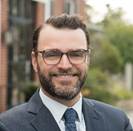
Andrew Tonelli, DMD: is a 2014 graduate of Tufts University School of Dental Medicine, and completed a general practice residency at New York Presbyterian Hospital and Cornell-Weill Medical Center in New York City before entering private practice with Dental Health Concepts in North Reading, MA. Dr. Tonelli developed a particular clinical interest in oro-facial pain during his residency and continues to consistently pursue CE in this subject area while treating patients in private practice.
Session 8
Speaker: Amanda Wobido, DDS
Moderator: Connie Kugel, RDH
Date/Time: Wednesday, November 18, 2026 6:30-8:30 PM
Course Title: Simplified Anterior Restorations: Adhesion, Esthetics, and Clinical Success
Course Description: This course will provide a practical approach to achieving predictable and esthetic anterior composite restorations through simplified and efficient techniques. Participants will review current adhesive systems, composite selection, and layering strategies that will optimize results with minimal shade complexity. The session will also address the limitations of direct composites, indications for ceramic alternatives, and key considerations in selecting and using light-curing units for reliable polymerization. Finishing and polishing protocols, along with clinical examples and evidence-based recommendations, will be presented to support long-lasting and esthetic outcomes in daily practice.
Course Objectives:
- Describe contemporary adhesive systems and bonding protocols for anterior composite restorations.
- Identify composite materials and layering strategies that balance esthetics, efficiency, and durability using simplified shade systems.
- Determine appropriate light-curing unit selection and parameters for reliable polymerization.
- Understand the limitations of anterior composite restorations and recognize alternative treatment options, including ceramic restorations when appropriate.
- Implement finishing and polishing techniques that enhance gloss retention and long-term clinical performance.
- Incorporate evidence-based strategies to improve predictability and clinical outcomes.
Speaker Bio:
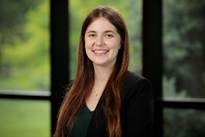
Amanda Wobido, DDS, MS: is an Assistant Professor in the Department of Adult Restorative Dentistry at UNMC College of Dentistry. She directs several preclinical courses, including Dental Anatomy, Cariology, Biomaterials, and Operative Sciences. Dr. Wobido’s teaching and research focus on operative dentistry, dental materials, and dental education. She completed her DDS at the University of Brasilia, her MS in Clinical Dentistry at the Federal University of Uberlândia in Brazil, and a specialty certificate in Operative Dentistry at the Brazilian Dental Association. She first joined UNMC as a visiting research assistant in 2019 and became a faculty member in 2021.

The Massachusetts Dental Society is an ADA CERP Recognized Provider
ADA CERP is a service of the American Dental Association to assist dental professionals in identifying quality providers of continuing dental education. ADA CERP does not approve or endorse individual courses or instructors, nor does it imply acceptance of credit hours by boards of dentistry. Concerns or complaints about a CE provider may be directed to the provider or to the Commission for Continuing Education Provider Recognition at ADA.org/CERP